Get Paid to Film Everyday Tasks at Home: Our First European Missions Are Now Open
Our first contributor missions are open right now, across most of Europe. If you have a smartphone and you do ordinary things around your home, you can start filming today and get paid for the footage that gets used. Here is exactly what that involves.
Robots learn to move through the world the same way people do: by watching. Before a robot can fold a shirt or load a dishwasher, someone has to show it what that looks like, thousands of times, from the point of view of the person actually doing it. That's the gap EgoVista fills. We collect first person video of ordinary household tasks and turn it into the training data that robotics and AI teams use to build machines that can actually help around a home.
This month we opened our first real missions for contributors across Europe, and we wanted to explain exactly what they involve, what makes a video worth submitting, and how the whole thing gets you paid.
What the mission actually asks for
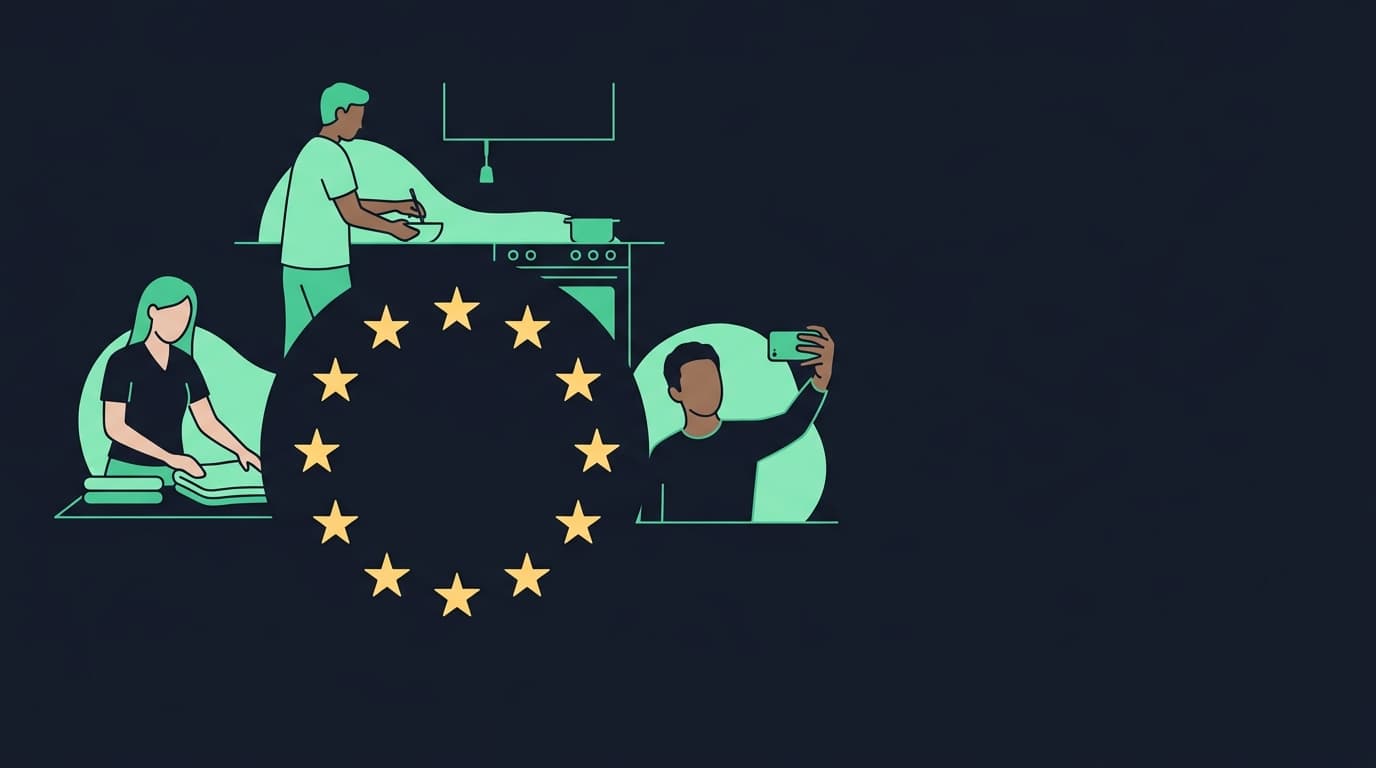
The missions are grouped by region, so wherever you are in Europe, from Ireland to Poland to Portugal, there's a version open to you. The task itself is simple: film yourself doing normal things you'd be doing anyway. Folding laundry, cooking, tidying a room, fixing something small around the house. You wear or hold the camera, so the footage shows the task from your own perspective, the same way a robot's camera eventually would.
There's no script, no studio, no crew. You film in your own home, on your own schedule, using equipment you probably already own.
What makes a video good
A handful of habits make the difference between footage that's genuinely useful and footage that ends up unusable, and they're worth knowing before you hit record.
Keep the camera steady and at a natural height, roughly eye level or chest height works best. Try to keep both hands in frame for the whole task, since hand movement is actually the part that matters most for training a robot. Film in a room with decent light rather than somewhere dim. Stick to one task per clip and let it run from start to finish without cutting away in the middle of a movement.
One thing worth knowing: longer clips are more valuable than short ones. A ten or fifteen minute session where you naturally move through a full task gives far more usable footage than several short clips stitched together, because a lot of what makes a video useful is the continuity of the motion itself, not just the total number of minutes filmed.
Each mission page also shows a short gesture to do at the very start of your video and the exact technical requirements for that mission, resolution, length, and so on, so it's worth checking that page before you film rather than relying on general advice like this one.
How the payment works
You're paid per hour of usable video, not a flat hourly wage. That distinction matters: it means the pay reflects footage that actually gets used, and it's not tied to a set schedule or a minimum number of hours. You film when it suits you.
The exact rate depends on where you're based and is shown directly on the mission page before you start, so there's no guesswork involved. Once your video is reviewed and accepted, the payment is added to your account balance.
What happens to your video
Faces of anyone who appears in the background who hasn't agreed to be filmed are automatically blurred before your video goes anywhere else. Everything is stored and processed within the EU. You're never filming for a stranger on the internet, you're contributing to a dataset built specifically for European robotics and AI research.
Who can take part
You need to be 18 or older and living in a country covered by one of the open missions. No special equipment is required. A smartphone works fine, and a GoPro or smart glasses with a basic mount work too if you have them. There's no fixed availability expected of you, no interview, no minimum commitment.
How to get started
Head to the contribute page on our site, find the mission for your country, and read through the short brief. It covers exactly what to film and how. From there you upload your first video directly from your phone or computer, and it goes into review.
If you already have an account, you can also invite people you know. Once someone you refer contributes their own footage and you've both hit the mission's usable footage threshold, you both get a small bonus credited to your balance. You'll find your personal invite link on your referrals page once you're signed in.
We're just getting started with these missions, and every contributor who joins now is helping build something that genuinely doesn't exist yet in Europe: a real, consent-based dataset of everyday human movement, collected and stored on the continent it comes from.