
Filming skilled hand work in your workshop: what it involves
Over the past two years, the laboratories that train robots to handle objects have changed the data they use. They used to teach a robotic arm one gesture at a time, by remote control. Now they train their models on video of human hands at work, filmed from the point of view of the person doing the task.
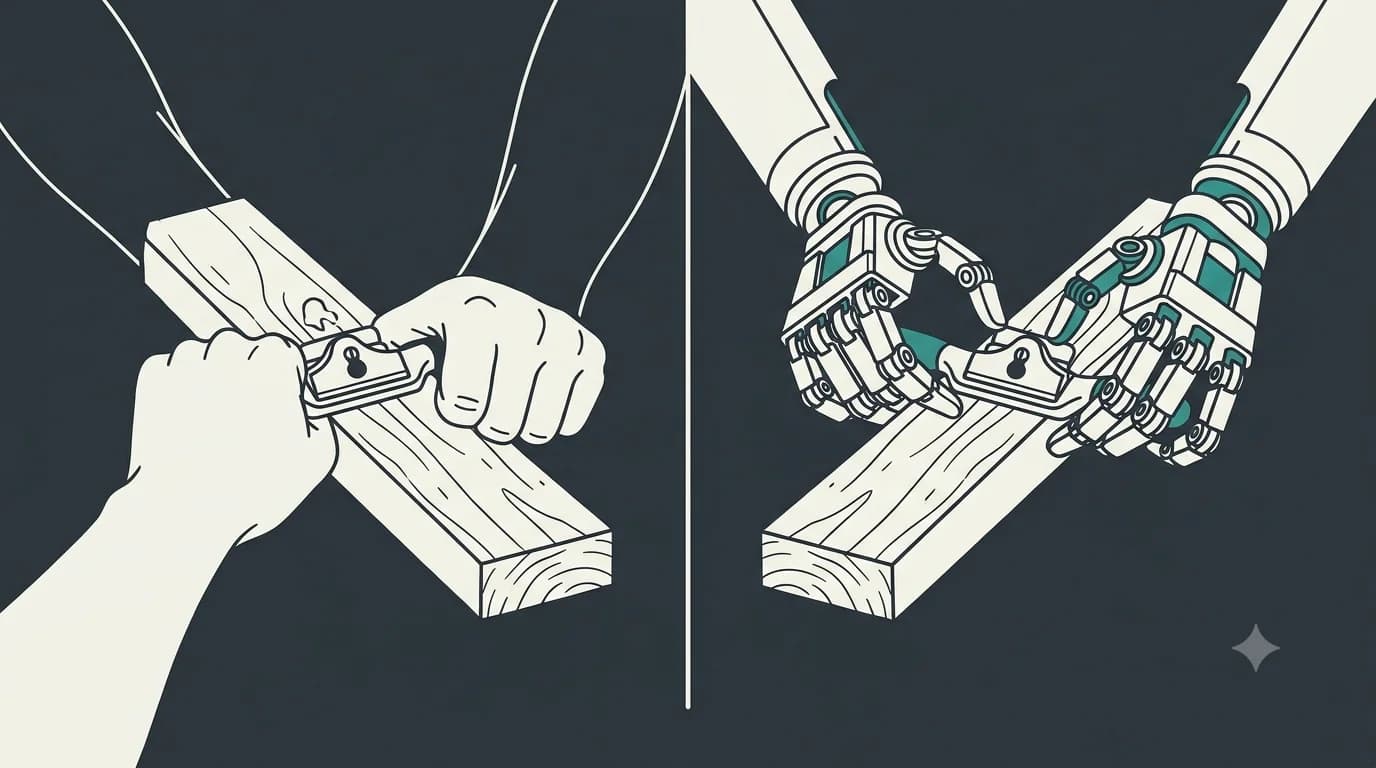
Most of the video available today was recorded in homes or in laboratories. Simple tasks, repeated, in a controlled setting. Real professional work, with real tools, on materials that resist, under production pressure, is almost absent. You cannot fake it, and nobody can film it without a company saying yes.
That is what we do. EgoVista is a French company. We record manual work, we build datasets from it, and we sell licences on those datasets to robotics laboratories in Europe, the United States and Asia. Your workshop would be one source among several. We say this clearly because it is in the contract, and because a company that finds out late is right to stop everything.
How a collection works
One of your operators wears a camera at eye level and works normally, at a workstation we agree on, in short sessions. Nothing is prepared, nothing is played again for the camera. What a model learns from is the gesture as it really happens, including when it goes wrong and has to be done again.
Three questions always come up. Each one has a clear answer.
What leaves the site. Trade secrets stop this kind of project more often than data protection does. Our answer is a review right before delivery. You watch all the video and you remove anything you do not want to leave your workshop. You do not have to explain why. This is written in the contract, with a deadline, so that it stays a review and does not become a permanent block.
The people filmed. An employee cannot freely say yes to their employer, because the two are not equal. European law treats it that way. So we take the employer out of the relationship. Each operator signs an agreement with us, and we pay them directly. You do not choose who takes part, and you do not see the video. Saying no, or stopping in the middle of a session, has no effect on their job. This is not a detail. It is what makes the whole thing legal.
Other people in the frame. Colleagues walking past, visitors, deliveries. We mark out the filming area, put up signs, provide an information notice, and cut anything outside it. Faces are blurred before the video goes anywhere.
One thing that people often find out too late. In a company with employee representatives, bringing in a device that can film how people work requires a formal consultation first. This applies even if nobody is being monitored and even if taking part is voluntary. That procedure is yours to run. It is not a problem, but it takes time, so it should start early.
What you get, and what you do not
Two things, and it is worth being honest about how big they are.
Your operators are paid directly for taking part. That is real, and it is the main thing.
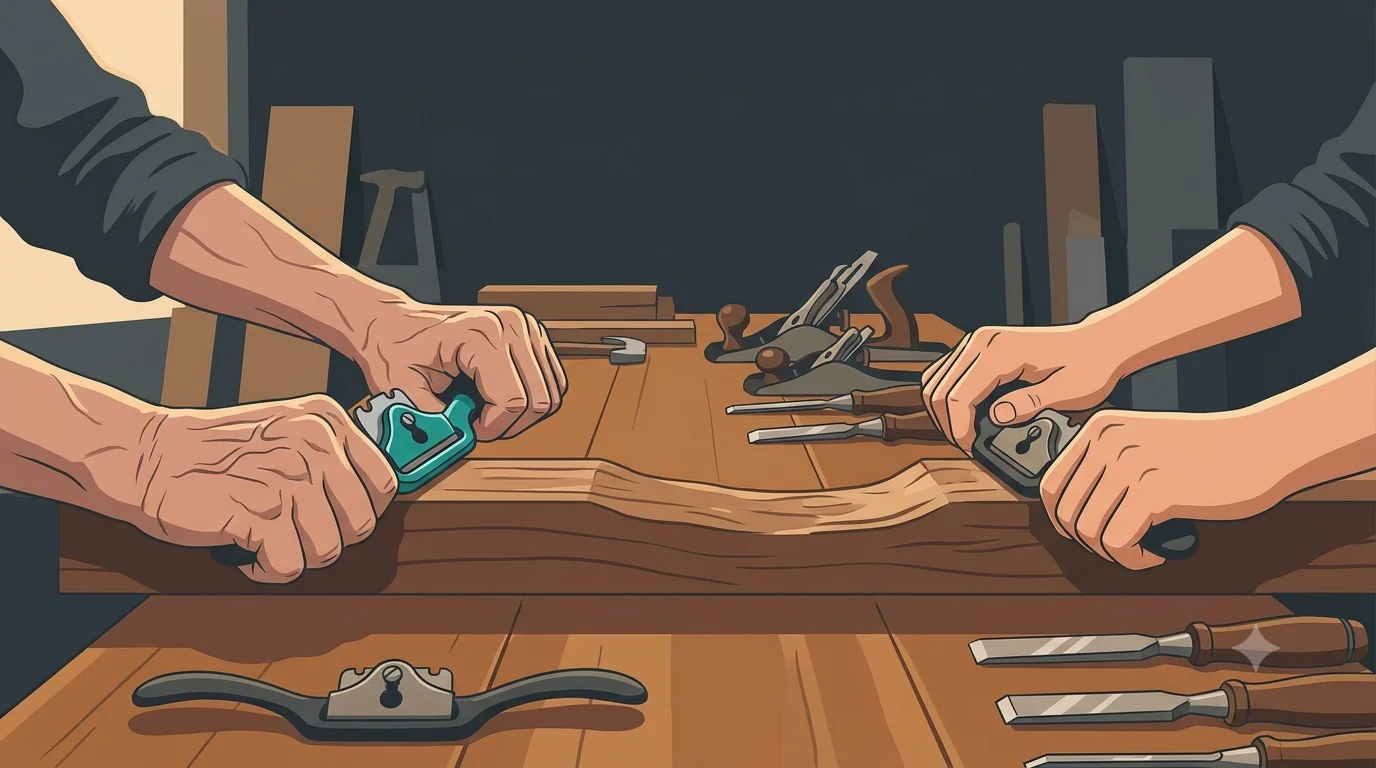
You keep the video you approved. Very few workshops have ever filmed how their work is actually done, and when an experienced person leaves, nothing of that is written down. The video is useful to train someone new or to document a workstation. It comes with the collection, but it is not the reason we are there, and we prefer to say that rather than sell it as more than it is.
What you do not get: any right over the dataset, any share of what we sell, or any promise about where the data goes beyond what the contract says. We also do not pay the company for its employees taking part. That is on purpose. If a company earns money when its people say yes, then its people are no longer free to say no. What can be paid for is different: the time and resources the site sets aside for us, such as a workstation taken out of production or a supervisor accompanying the sessions. That is a fixed amount agreed in advance, unrelated to how many people take part or how much footage we end up with.
Where we are today
We are starting this programme now and looking for our first partner sites, in France first and then elsewhere in Europe. No collection has happened yet. We prefer to say so.
If you run a workshop, a small industrial company or a craft business, the Manufacturing & crafts page explains how a collection works, what you control, and what we need to know before we propose anything. A short call is enough to see whether it makes sense at your site.